- Green Building News
- Posts
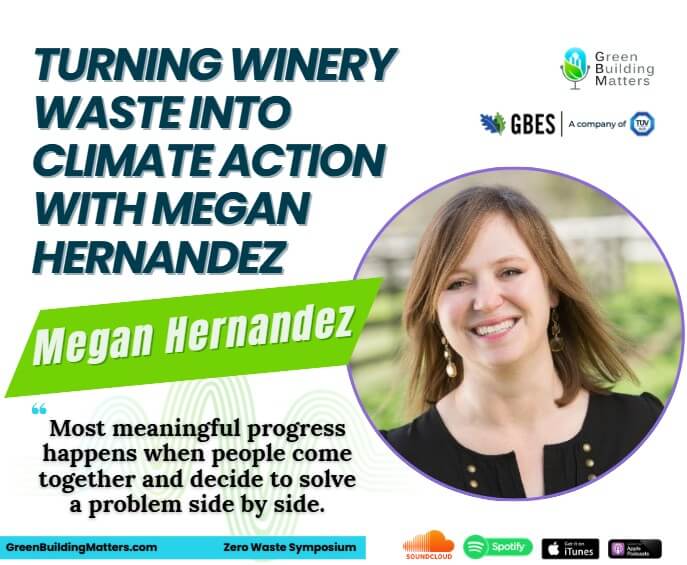
- Turning Winery Waste into Climate Action with Megan Hernandez
Turning Winery Waste into Climate Action with Megan Hernandez

Charlie Cichetti
April 16, 2026

TODAY’S EPISODE IN PARTNERSHIP WITH BUILDINGPLAQUES.COM

QUICK TAKE
The wine industry produces mountains of packaging waste most people never see. Megan Hernandez is proving that when vineyards collaborate, that “trash” can become a powerful lever for sustainability — and even revenue.
A MESSAGE FROM BUILDINGPLAQUES.COM
The Better Way To Present Your LEED Certified Project to The World
Using buildingplaques.com online Plaque Designer, you can quickly and easily design and order customized LEED recognition plaques that features the details of your specific LEED certified project.
Our architectural grade anodized aluminum signs are available in multiple sizes, and identify the elements of your design that earn LEED certification and acknowledge key project members, all while being less expensive than comparable LEED recognition plaque options.
Ready to create your own LEED recognition plaque?
🌱BREAKING GROUND ON BETTER BUILDING
[Key Insight #1] Waste isn’t garbage — it’s an untapped commodity stream.
What's outdated: Many wineries — and businesses in general — assume their waste belongs in recycling or landfills. But large portions of materials like plastics and packaging never actually get recycled.
The innovation: The North Bay Zero Waste Collective aggregates waste materials from multiple wineries to meet volume thresholds required by recycling and reuse markets.
Impact: Wineries reduce landfill costs, create potential revenue streams from recovered materials, and dramatically reduce environmental impact.
[Key Insight #2] Sustainability becomes scalable when competitors collaborate.
What's outdated: Individual wineries rarely generate enough recyclable material to meet the large volume requirements needed for viable recycling or commodity markets.
The innovation: By organizing wineries across Napa and Sonoma into a shared waste collection network, Megan’s initiative consolidates materials into full truckloads (~40,000 pounds).
Impact: Collaboration unlocks economies of scale, turning sustainability into a financially viable system rather than an individual burden.
[Key Insight #3] Education is the gateway to real sustainability
What's outdated: Many employees and business leaders assume that anything placed in a recycling bin automatically gets recycled.
The innovation: Megan leads ongoing education conversations with wineries about where waste actually goes — and how supplier choices impact recyclability.
Impact: Better awareness drives smarter procurement, reduces waste upstream, and increases participation in circular material systems.
Limited Sponsorship Opportunities Available
Green Building Matters Podcast is now exploring a select number of brand partnerships with organizations aligned with the future of sustainable building.
Reach the professionals shaping the industry—and do it with intention.
[email protected]
✅ CONNECT AND CONTINUE
🌿 Access full episode resources: Green Building Matters Podcast
📄 Read the transcript: HERE
🔗 Connect with Megan Hernandez:
🤝 YOUR GREENCAST PARTNERS
The Better Way To Present Your LEED Certified Project to The World