- Green Building News
- Posts
- The Heat Dome Playbook for Buildings and Crews
The Heat Dome Playbook for Buildings and Crews

Charlie Cichetti
August 09, 2026


Smart strategies. Sharp stories. Sustainability that sticks.

📬 INTRO: THE SUMMER CALLED OUR BLUFF
A few weeks back I confessed that I overcool my house on purpose. Then July set all-time temperature records across four states and made my thermostat look conservative.
The story goes past comfort. Crews work through it on open jobsites, chiller plants have run flat out since June, and the rules underneath keep moving.
Here's a rundown, from the record books to the chiller room.
🌍 FIELD NOTES: HEAT IS AN OPERATING CONDITION NOW
🌡️ The Summer the Records Fell
On July 12 a heat dome parked over the northern Rockies and pushed airport sensors to all-time record highs: 115F in Miles City, Montana, 111F in Billings, 109F in Sheridan, Wyoming, and 109F in Salt Lake City, four degrees above its previous all-time mark.
Miles City beat its all-time record by four full degrees. In Montana.
👷 The Rule That Keeps Slipping
The federal OSHA heat standard is still not final. The Department of Labor now plans a supplemental proposed rule for December 2026, and OSHA's heat enforcement program (7,000 inspections since 2022) expired April 8 with no announced renewal. Maryland's standard, in force since 2024, kicks in at an 80F heat index and requires 15-minute breaks every hour above a 100F index.
Until Washington finishes the rule, your heat plan is the standard your crew works under.
⚙️ Fix the Chiller You Have
Cooling can eat up 40% of a commercial building's energy, and hydronic loops quietly lose 1-3% efficiency a year to fouling. A July framework in Buildings.com by HT Materials Science's Ben Taylor makes the case for optimizing before replacing: baseline your COP and delta-T, verify for 12 months, then run the economics. His case studies of heat-transfer-fluid upgrades showed 10-15% whole-system gains, including 13% at a tech campus.
A double-digit efficiency gain is hiding in equipment you already own.
The same rule works at home. A ceiling fan lets you bump the thermostat 4F with no loss of comfort, per the Department of Energy, and closed cellular shades cut solar heat gain up to 60% during cooling season, per the DOE.
No capital project. A fan, a shade, a thermostat you leave alone.
🏙️ Atlanta Paints It White
Atlanta's cool roof ordinance, passed unanimously last June, sets the strictest reflectance bar in the country: 0.70 solar reflectance and an aged SRI of 85 on low-slope roofs citywide. Modeling cited by Columbia Law's climate blog projects a 2.4F peak citywide temperature cut, and up to 6.3F in the hottest neighborhoods. You can do this at home too. I put heat-reflective coating on my own roof and felt the relief.
Six degrees of relief in the hottest blocks, from the roof up.
A MESSAGE FROM BUILDINGPLAQUES.COM
Using buildingplaques.com online Plaque Designer, you can quickly and easily design and order customized LEED recognition plaques that features the details of your specific LEED certified project.
Our architectural grade anodized aluminum signs are available in multiple sizes, and identify the elements of your design that earn LEED certification and acknowledge key project members, all while being less expensive than comparable LEED recognition plaque options.
Ready to create your own LEED recognition plaque?
🏛 BUILT TO LAST:
Treat heat like a season-long operating condition, not a bad week. Baseline the cooling plant now, write the crew heat plan to the strictest state standard you touch, and put reflectance in the spec before the next reroof.
By role:
🏢 Operators: Baseline chiller COP and delta-T this month. September heat will test whatever you find.
🔨 Builders: Write your heat plan to Maryland's 80F trigger. Don't wait for the December rulemaking to become a change order.
📐 Designers: Atlanta's 0.70 reflectance number is the new benchmark to design against.
🌱 Emerging pros: Learn the state heat rules. Clients are asking and few competitors know the map.
💬 QUOTE OF THE WEEK
“We used to treat heat as a comfort complaint. Now it's a line item in the budget and the safety plan.”
— Charlie Cichetti, CEO of Skema and LEED Fellow
🧠 TL;DR
Records fell across the West, the federal heat rule slipped to December, and cooling eats up to 40% of building energy. Tune what you own.
🧱RETROFIT THIS

🔧TOOLS DOWN:
Baseline the plant.
Shade the crew.
Write the heat plan.
Paint the roof white.
Tune it before you replace it.
Summer isn't done with us yet.
🧠 PRO TIP FROM BRIAN:
If you know me, you know I love tech tools! A friend of the GBM newsletter recommended trying Wispr Flow a few months ago, and it has absolutely blown me away! I never imagined a dictation tool could save this much time.
I rarely recommend things with absolutely zero reservations, but Wispr Flow is one you should totally try!
Slack replies in seconds. Not minutes.
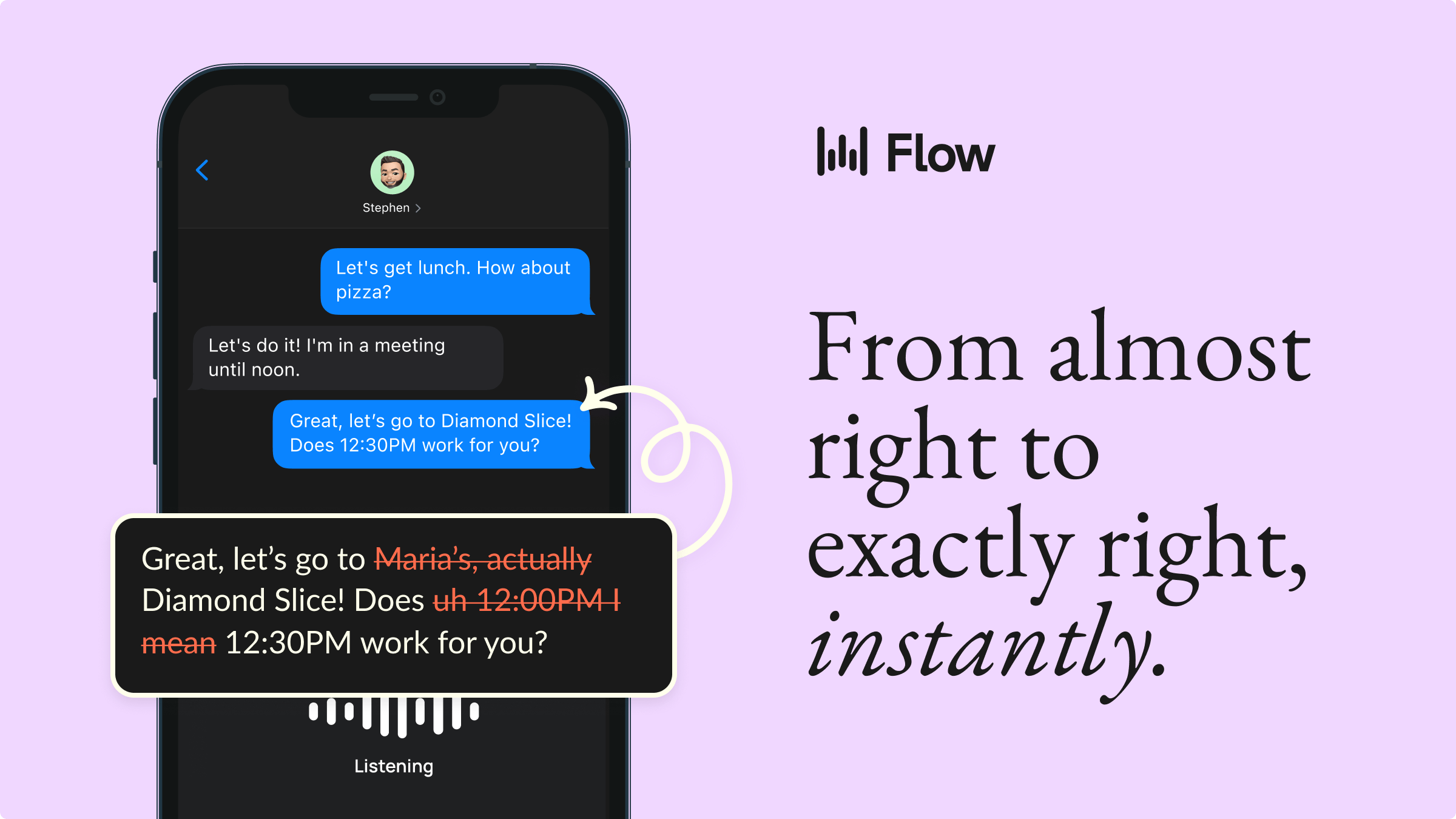
Dictate into Slack, email, LinkedIn, or any app and get polished, send-ready text. Wispr Flow strips filler and formats everything. 89% of messages sent with zero edits. Works on Mac, Windows, and iPhone.
LIMITED SPONSORSHIP OPPORTUNITIES AVAILABLE
Green Building Matters Podcast is now exploring a select number of brand partnerships with organizations aligned with the future of sustainable building.
Reach the professionals shaping the industry—and do it with intention.
✍️ Brian Bollinger, our Head Writer, helps sustainability professionals connect performance, workflow, and real-world results.
🌍️ Charlie Cichetti, our Fearless Leader and CEO of Skema and LEED Fellow, has guided more than 150,000 professionals as building practice continues to evolve.
Let’s Green Up together.
👉 [Explore Sustainability Credentials at GBES.com]
👉 [See what Skema’s building for architects]
👉 [Book a Waste2Zero audit before your next ESG deadline]
Are you excited to read next week's newsletter? |